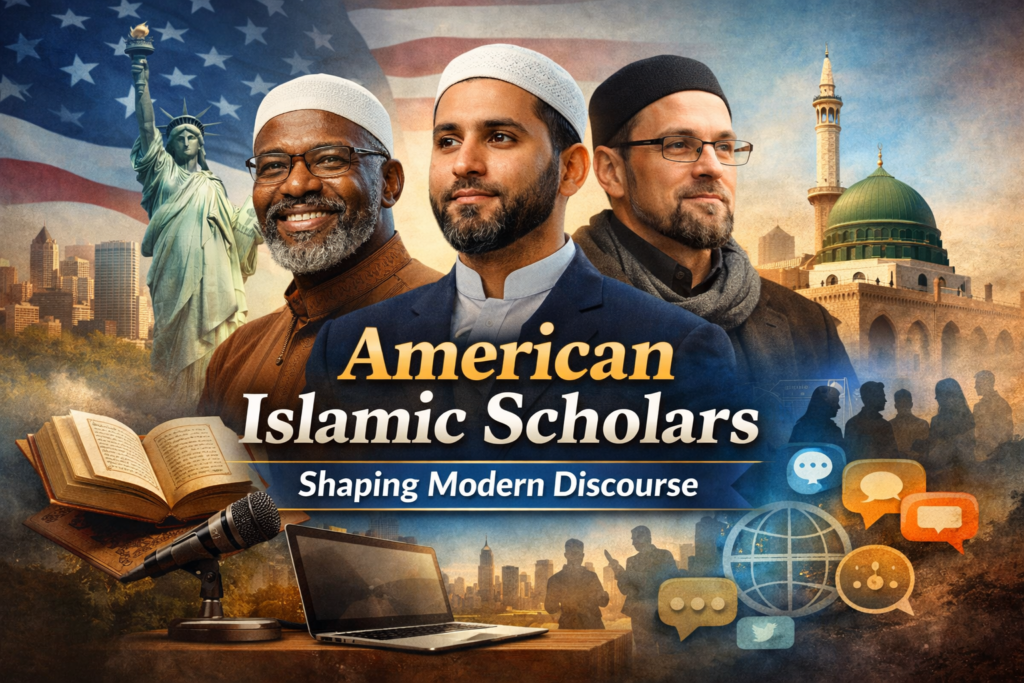
American islamic scholars play a crucial role in shaping religious understanding, cultural integration, and intellectual dialogue. As bridges between tradition and modernity, these scholars contribute significantly to contemporary conversations on faith, identity, and social responsibility. The presence of american islamic scholars has transformed how Islam is perceived and practiced in Western societies, making their role more vital than ever.
Across universities, mosques, and digital platforms, american islamic scholars are actively engaging with both Muslim and non-Muslim audiences. They are redefining the role of islamic religious scholars by addressing modern challenges such as social justice, interfaith dialogue, and ethical living in a globalized world. This blog explores how american islamic scholars are shaping modern discourse while remaining rooted in the rich traditions upheld by scholars of islam.
The Evolution of American Islamic Scholars
From Traditional Roots to Modern Influence
Historically, scholars in islam were primarily based in the Middle East, South Asia, and North Africa. However, the migration of Muslims to the United States has given rise to a new generation of islamic scholars who are deeply connected to both Islamic traditions and Western values.
These islam scholars often receive classical training in Islamic sciences while also pursuing higher education in Western institutions. This dual expertise allows scholars islam to address contemporary issues with both authenticity and relevance. As a result, american islamic scholars are uniquely positioned to interpret Islamic teachings in ways that resonate with modern audiences.
Key Contributions of American Islamic Scholars
1. Promoting Interfaith Dialogue
One of the most impactful roles played by islamic religious scholars in the United States is fostering interfaith understanding. Through public lectures, conferences, and community programs, scholars of islam engage with leaders from other faith traditions to promote peace and mutual respect.
These efforts by scholars in islam help dispel misconceptions about Islam and build bridges across diverse communities. The involvement of islam scholars in interfaith initiatives highlights their commitment to coexistence and harmony.
2. Addressing Contemporary Social Issues
Modern challenges such as climate change, racial inequality, and mental health require thoughtful responses rooted in faith. Islamic scholars in America are at the forefront of addressing these issues from an Islamic perspective.
By issuing guidance and participating in social movements, scholars islam ensure that Islamic teachings remain relevant. Their work demonstrates how scholars of islam can contribute meaningfully to broader societal conversations.
3. Digital Outreach and Education
The digital age has opened new avenues for american islamic scholars to reach global audiences. Through social media, podcasts, and online courses, these islam scholars are making Islamic knowledge more accessible than ever.
Platforms like YouTube and Instagram have become powerful tools for islamic religious scholars to share insights, answer questions, and engage with younger generations. This digital presence ensures that scholars in islam remain influential in shaping modern discourse.
Prominent American Islamic Scholars
Influencers in Faith and Thought
Several american islamic scholars have gained recognition for their contributions to education, activism, and public discourse. These individuals exemplify the evolving role of islamic scholars in the modern world.
They combine traditional scholarship with contemporary communication methods, making them relatable and impactful. Through their work, scholars islam continue to inspire millions and guide communities toward a balanced understanding of faith.
Challenges Faced by American Islamic Scholars
Navigating Cultural and Religious Expectations
Despite their contributions, scholars in islam in the United States face unique challenges. Balancing traditional Islamic values with modern societal norms can be complex.
Islam scholars often encounter criticism from both conservative and progressive audiences. While some expect strict adherence to tradition, others push for reinterpretation. This tension requires islamic religious scholars to navigate carefully while maintaining credibility.
Combating Misrepresentation
Another major challenge is addressing the misrepresentation of Islam in media and public discourse. Scholars of islam play a critical role in correcting misconceptions and providing accurate information.
Through education and advocacy, american islamic scholars work tirelessly to present a true picture of Islam, countering stereotypes and promoting understanding.
The Future of Islamic Scholarship in America
A New Generation of Scholars
The future looks promising as more young Muslims pursue careers in Islamic studies. This new wave of islamic scholars is diverse, educated, and deeply committed to serving their communities.
These emerging scholars islam bring fresh perspectives while staying grounded in tradition. Their contributions will further strengthen the role of scholars in islam in shaping modern discourse.
Expanding Global Influence
With the power of digital media, american islamic scholars are no longer limited to local communities. Their teachings reach audiences worldwide, influencing how Islam is understood globally.
This expanding influence underscores the importance of islam scholars in addressing universal challenges and promoting ethical values. As scholars of islam continue to engage with global audiences, their impact will only grow.
The Lasting Impact of American Islamic Scholars
In conclusion, american islamic scholars are playing a transformative role in shaping modern discourse. Their ability to bridge tradition and modernity makes them invaluable in today’s world. From promoting interfaith dialogue to addressing social issues, american islamic scholars are redefining the role of islamic religious scholars in contemporary society.
As scholars islam continue to evolve, their contributions will remain essential in guiding communities and fostering understanding. The influence of scholars in islam extends beyond religious teachings, impacting cultural, social, and intellectual spheres.
If you are looking to explore more about the work and impact of american islamic scholars, connect with organizations like NAIF Center. Their initiatives help promote knowledge, community engagement, and meaningful dialogue, making them a valuable resource for anyone interested in the contributions of scholars of islam in today’s world.