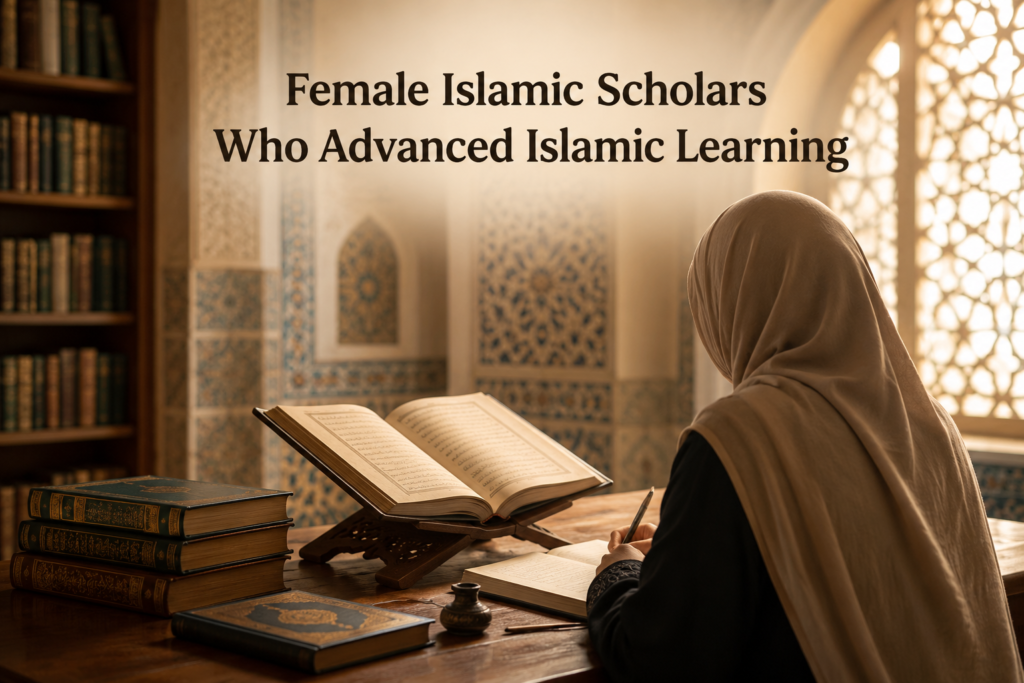
For centuries, female islamic scholars have played a remarkable role in preserving, teaching, and expanding Islamic knowledge. While history often highlights the contributions of men, countless women dedicated their lives to learning, teaching, and transmitting authentic Islamic teachings. Their influence shaped generations of students, inspired communities, and strengthened the foundations of Islamic scholarship. Understanding the lives of these female islamic scholars provides valuable insight into the rich intellectual heritage of Islam and encourages both men and women to pursue lifelong learning.
Throughout Islamic history, respected teachers, jurists, and narrators worked alongside renowned scholars to ensure the preservation of religious knowledge. Many of these women studied with leading islamic religious scholars, became respected scholars islam, and taught future generations of islamic scholars. Their achievements demonstrate that the pursuit of knowledge has always been central to Islamic civilization.
The Importance of Female Islamic Scholars in Islamic History
The pursuit of knowledge is one of the highest virtues in Islam. From the earliest days of Islam, women actively participated in religious education, scholarship, and teaching. Many became respected female islamic scholars whose opinions, teachings, and narrations continue to benefit Muslims today.
The Islamic tradition encouraged both men and women to seek knowledge. As a result, women studied under renowned islam scholars, collaborated with respected scholars of islam, and eventually became influential scholars in islam themselves. Their dedication ensured that authentic teachings were preserved for future generations.
These women were not only students but also educators, researchers, and advisors who earned the respect of many famous islamic scholars during their lifetimes.
Early Female Islamic Scholars Who Preserved Knowledge
Aisha bint Abu Bakr
Among the most influential female islamic scholars in Islamic history is Aisha bint Abu Bakr. She narrated thousands of Hadiths and became one of the most trusted authorities on Islamic law, worship, family matters, and ethics.
Numerous companions and later islamic religious scholars sought her guidance. Her deep understanding of the Qur’an and Sunnah established her as one of the greatest scholars islam has ever produced. Many prominent islamic scholars referenced her narrations when issuing legal opinions.
Umm Salama
Umm Salama also made lasting contributions to Islamic learning. Her wisdom, knowledge, and accurate narration of Hadith influenced generations of islam scholars. She frequently advised companions and answered religious questions, earning recognition among respected scholars of islam.
Her scholarly contributions continue to be studied by modern scholars in islam, highlighting the important educational role women played in early Muslim society.
Female Islamic Scholars Who Taught Great Scholars
One fascinating aspect of Islamic history is that many respected male scholars studied under female teachers.
Throughout different centuries, accomplished women taught Hadith, Qur’anic sciences, jurisprudence, Arabic language, and theology. Even several famous islamic scholars proudly listed female teachers among their most trusted instructors.
This educational tradition illustrates the mutual respect shared between men and women in the pursuit of authentic Islamic knowledge.
Fatima al-Fihri
Fatima al-Fihri is celebrated for founding one of the world’s oldest continuously operating universities in Fez, Morocco. Although widely recognized for her charitable vision, her contribution to Islamic education greatly benefited generations of islamic scholars.
Her institution became a center where leading islamic religious scholars gathered to teach various Islamic sciences. Students from different regions studied alongside respected scholars islam, making it an important center of intellectual development.
Karima al-Marwaziyya
Karima al-Marwaziyya became one of the most respected Hadith scholars of her era. She specialized in Sahih al-Bukhari and attracted students from across the Muslim world.
Many notable islam scholars traveled long distances to study under her supervision. Her expertise earned admiration from prominent scholars of islam, and her influence continues to be acknowledged by contemporary scholars in islam.
The Lasting Contributions of Female Islamic Scholars
The achievements of female islamic scholars extend beyond teaching. They helped preserve authentic narrations, authored scholarly works, issued legal opinions, mentored students, and supported educational institutions.
Their influence can be seen in several areas:
Preservation of Hadith
Women carefully memorized, verified, and transmitted Hadith literature. Their precision strengthened the authenticity of Islamic teachings and earned praise from many famous islamic scholars.
Islamic Jurisprudence
Several women became experts in Islamic law, answering legal questions and providing guidance alongside respected islamic scholars.
Education and Teaching
Mosques, homes, and educational institutions often welcomed female educators who instructed both men and women. These teachers worked closely with islamic religious scholars and inspired future generations of scholars islam.
Community Leadership
Their scholarship extended beyond classrooms. Many women offered advice, resolved community issues, and promoted ethical conduct, becoming respected islam scholars within their communities.
Female Islamic Scholars in the Modern World
Today, the legacy of female islamic scholars continues through educators, researchers, professors, and community leaders across the globe.
Modern institutions encourage women to pursue Islamic studies, helping preserve the traditions established by earlier scholars of islam. Universities, Islamic centers, and online learning platforms now provide opportunities for women to become recognized scholars in islam.
Several american islamic scholars have also contributed significantly to Islamic education by delivering lectures, publishing books, conducting research, and mentoring students. Their work helps make authentic Islamic knowledge more accessible to Muslims living in Western societies.
In addition, collaboration between international educators and famous scholars of islam has strengthened Islamic learning through conferences, digital education, and scholarly publications.
Why Their Legacy Matters Today
Learning about these remarkable women helps correct the misconception that Islamic scholarship was exclusively led by men. History clearly demonstrates that women actively contributed to preserving religious knowledge and educating entire communities.
The examples set by these pioneers encourage Muslims to value education regardless of gender. Their dedication inspires future generations to study the Qur’an, Hadith, jurisprudence, and Islamic ethics with sincerity and excellence.
By recognizing the achievements of both male and female scholars, Muslims gain a more complete understanding of Islamic intellectual history and appreciate the collaborative efforts that preserved authentic teachings for centuries.
Conclusion
The remarkable journey of female islamic scholars reminds us that knowledge, dedication, and faith transcend gender. From narrating Hadith and teaching jurisprudence to founding educational institutions and mentoring generations of students, these extraordinary women made invaluable contributions to Islamic civilization. Their influence continues to inspire students, educators, researchers, and communities around the world.
Whether studying the works of respected islamic scholars, learning from american islamic scholars, or exploring the teachings of famous scholars of islam, Muslims can appreciate the rich scholarly tradition built by both men and women. By preserving and sharing authentic knowledge, these women ensured that Islamic learning would continue to flourish for generations.
If you are passionate about expanding your understanding of Islamic history, scholarship, and authentic teachings, explore the educational resources available through NAIF Center. Discover insightful programs, articles, and learning opportunities that help preserve the timeless legacy of Islamic scholarship while supporting your journey toward deeper knowledge and faith.